


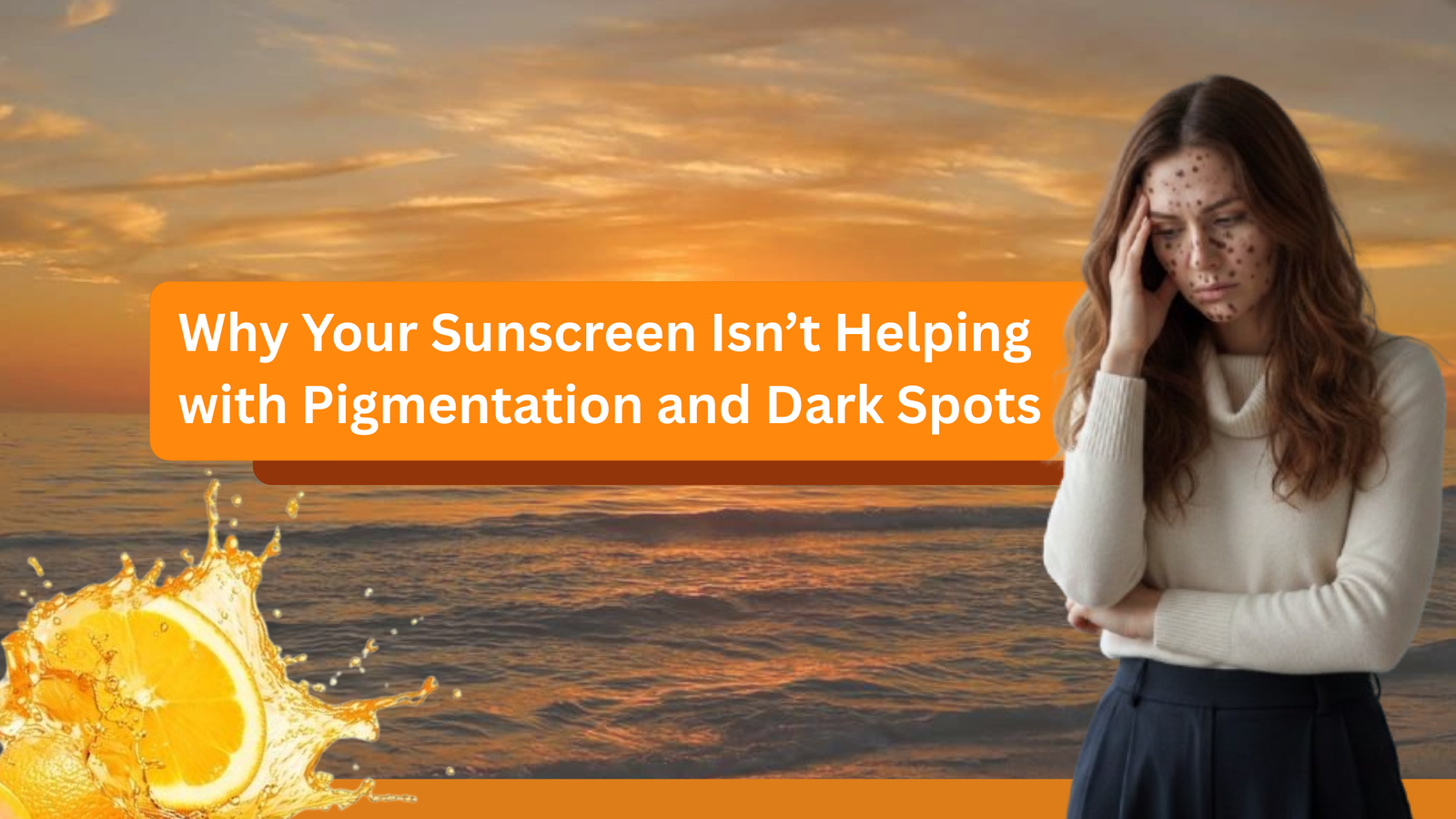
One of the most enduring skincare issues is pigmentation and dark spots, particularly in climates that have a high and reliable sun exposure. There are a lot of individuals who use sunscreen on a regular basis and still experience tanning, uneven skin color and persistent marks.
It is not typically the sunscreen, it’s using the wrong type of sunscreen or using it incorrectly.
A brightening sunscreen spray can help support both UV protection and visible skin-tone improvement, however, it is necessary to understand the pigmentation mechanism to achieve the desired effect.
Why Pigmentation Keeps Getting Worse
Pigmentation happens when skin produces excess melanin due to triggers like:
-
UV exposure
-
Acne inflammation
-
Hormonal changes
-
Skin irritation
-
Dehydration
Among these, sun exposure remains the biggest trigger for long-term pigmentation. Dermatology guidance consistently shows that daily sunscreen use is essential for preventing dark spots from deepening.
Many people expect sunscreen to remove pigmentation, but sunscreen prevents additional darkening while supporting skin recovery over time. This is why choosing the right sunscreen for pigmentation matters.
The Most Common Reason Sunscreen Doesn’t Help Dark Spots
The UV rays are the only rays that are covered by traditional conventional sunscreen. They are not concerned with dullness, dehydration or coarse tone, which enhance pigmentation.
A brightening sunscreen spray works differently because it combines:
-
Sun protection
-
Hydration support
-
Skin-brightening ingredients
The combination helps in prevention of the new pigmentation and also in the enhancement of the general appearance of the skin over the time.
As long as the sunscreen contains such ingredients as niacinamide, antioxidants, glycerine or calming botanical extracts, it helps repair the skin in addition to protecting against the sun.
Reapplication: The Step Most People Skip
One of the biggest reasons sunscreen fails to prevent pigmentation is inconsistent reapplication.
Dermatology recommendations state that sunscreen should be applied 15 minutes before sun exposure and reapplied every 2–3 hours when outdoors, especially in strong sunlight.
This is where a sunscreen spray for pigmentation becomes more practical than traditional cream formulas. Sprays format ensures that they can be reapplied easily without disturbing the make-up or day-to-day activities and hence even protection is simple to maintain.
One of the factors that are most important in avoiding the worsening of pigmentation is consistency.
Hydration Plays a Bigger Role Than You Think
A dry skin appears blunt, uneven, and pigmented. Pigmentation may become darker and healing is retarded when the skin barrier is disrupted.
A body sunscreen spray for pigmentation that includes moisturizing ingredients helps maintain:
-
Skin barrier health
-
Smooth texture
-
Even tone
-
Natural glow
Hydrated skin reflects light better and appears brighter, which is why modern sunscreens increasingly combine sun protection with moisturizing ingredients.
This strategy is compatible with more recent skincare products that can be used on a daily basis in hot weather.
Why Spray Sunscreen Can Be More Effective for Daily Use
Ease of use directly affects consistency. If sunscreen feels heavy, sticky, or inconvenient to reapply, people tend to skip it — which allows pigmentation to worsen.
A brightening sunscreen spray offers several advantages:
-
Lightweight application
-
Even coverage
-
Faster absorption
-
Easy reapplication
-
Suitable for face and body
Because sprays simplify application, they help people follow the most important pigmentation-prevention rule: consistent sun protection throughout the day.
Face vs Body Pigmentation: Often Overlooked
Many people focus sunscreen only on their face, but pigmentation frequently appears on:
-
Neck
-
Arms
-
Hands
-
Shoulders
-
Legs
These sections are exposed to direct sun rays on a daily basis. A body sunscreen spray for pigmentation helps to cover most of the exposed parts.
Pigmentation prevention requires protecting all exposed skin, not just the face.
The Science Behind Sunscreen and Pigmentation Prevention
The UV radiation causes oxidative stress on the skin that leads to the production of melanin. In the long run, it causes dark spots and uneven tone.
The harmful rays can be blocked with the help of the sunscreen and the process of skin renewal is supported with the help of brightening ingredients.
This is why modern skincare focuses on multi-benefit sun protection formulas, especially for people dealing with pigmentation concerns.
Using a sunscreen for pigmentation daily will normalize the melanin production and will not allow the spots that already exist to become darker.
What Results Should You Expect?
The process of pigmentation is time-consuming. Sunscreen will stop additional darkening and remedial ingredients will assist to make the skin look even over time.
Using a body sunscreen spray regularly to pigment the skin, individuals tend to experience:
-
Reduced tanning
-
Less dullness
-
More even tone
-
Healthier-looking skin
Visible improvement typically appears after several weeks of consistent sun protection.
Sunscreen cannot serve as a temporary solution but can only be effective in the long-term skincare program.
Overall Summary
If sunscreen isn’t helping your dark spots, the issue is usually inconsistent use, lack of hydration support, or using a formula that only protects without supporting skin brightness.
A brightening sunscreen spray allows people to take care of their skin daily with ease, prompts them to reapply, and helps their skin to look healthier in the long run.
The management of pigmentation is not about a specific product, it is about a regular routine of sun protecting, hydrating and skin supporting ingredients coming together. Dark spots are much easier to avoid when sunscreen is becoming a routine.
Read Full Blog: https://glowral.com/blogs/blogs/why-your-sunscreen-for-pigmentation-is-not-working

 English
 Arabic
 Spanish
 Portuguese
 Deutsch
 Turkish
 Dutch
Dutch
 Italiano
 Russian
 Romaian
 Portuguese (Brazil)
 Greek
Greek