


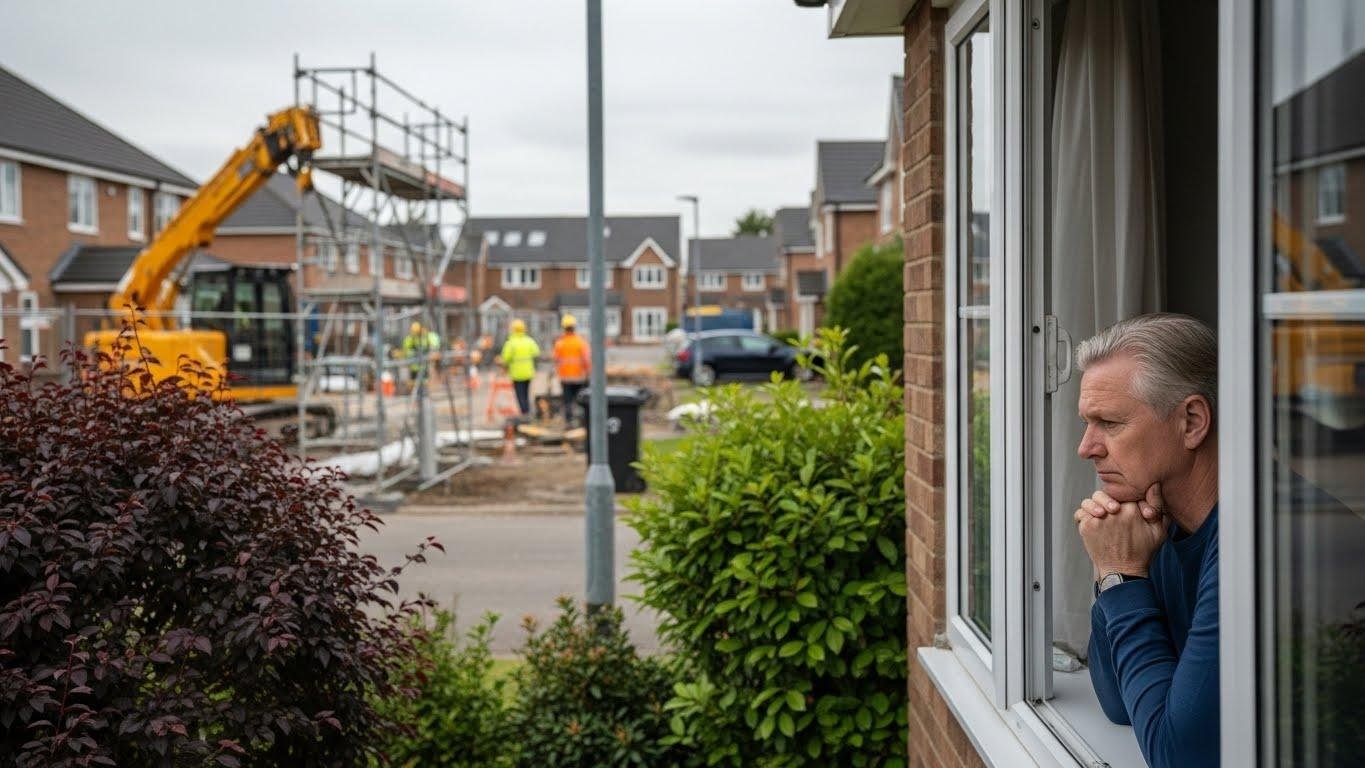
Construction projects play a critical role in the development of the community by bringing new houses, offices, and infrastructure. Nevertheless, it is the daily activity of the heavy machines, drilling and hammering, which can be extremely disturbing. The noise produced by excessive construction not only impacts comfort but may also compromise mental and physical health, particularly in mixed and residential neighborhoods. It is important that residents understand how to make a valid complaint that would grant them relief and guarantee that the contractors would comply with the local noise control rules.
A majority of the cities contain certain noise ordinances that restrict construction activities to a given hour or even days. Whether it is early morning noise or the violation of noise on a weekend, it is better to be aware of your rights and the appropriate authorities to complain so as to ensure your neighborhood remains calm and responsible.
1. Understand Local Noise Regulations.
Prior to complaining, one should be aware of the noise laws in their city. The majority of municipalities impose restrictions on the construction activities, and usually they are only allowed to work during daytime hours, usually between 7 a.m. and 6 p.m. during the weekdays and 9 a.m. and 5 p.m. during weekends. These laws are different, and therefore, visit your local government or municipal site to find out.
Cities such as New York, Los Angeles, or Chicago have well-defined Quiet Hours, and any activity that is performed outside the hours without making special authorizations could be regarded as a violation. Knowing these rules will help you know whether your complaint is fair or not, and it will also help you deal with the situation with the correct information.
2. Document the Noise Problem
Record the construction noise when it is too loud or when it occurs during the hours beyond authorized time. Record dates, times, and length of the noise source, and also record the location and type of activity, e.g., jackhammering, drilling, or heavy vehicle movement. Recording audio or video records can also have a strong effect on your case. Maintain a diary that records the frequency and duration of the disturbances. This record would be useful when you have to complain to the authorities, as it would give them a clear pattern of violation, and would help you to complain with facts and not vague allegations.
3. Contact the Construction Company or Site Manager
Before making it big, attempt to get in contact with the contractor, site supervisor, or property owner. In some cases, the problem might be caused by miscommunication, i.e., the workers arriving too early or the equipment being kept on after working hours. An amicable chat may tend to give a rapid change of gears, so long as the contractor does not want to spoil the relationship with the community. In approaching them, give them clear information about the problem and make them stick to the allowed working hours. A significant number of construction crews are cooperative when they know the commotion that is being made.
4. File a Complaint with Local Authorities
When the noise continues even after communication, then it is time to attract the attention of the local authorities. Any city has an official agency to address noise complaints, normally the Department of Environmental Protection (DEP), Code Enforcement Office, or local council. The complaints can be made most of the time online, over the phone, or on mobile apps.
At this point, it’s also useful to understand how a construction estimate or project plan includes scheduling for noise management. Many municipalities require contractors to submit noise mitigation details as part of their construction estimate documents to ensure compliance with local ordinances. Understanding this helps residents recognize when a site might be breaching approved work hours or operational limits.
As an example, New York City has 311, and Los Angeles has its Noise Enforcement Program. Provide all the needed information when filing: the place of noise, time, the nature of noise, and other supporting evidence. The government will then come and check on the site and impose a fine or a warning in case of any violations.
5. Call the Police for Immediate Violations
In case the noise is during the hours when they are not legal and significantly disturbing, particularly at night, you can call your local non-emergency police number. The police officers would be able to respond to determine whether the construction activity is against the municipal noise ordinances. In case of emergencies, e.g., extremely loud or dangerous activities that create a safety hazard, residents can request 911. The presence of the police will make the site operators accountable and can even result in a complete stop of operations in case of the discovery of a violation.
6. Seek Support from Local Councils or Community Boards
Should you not be satisfied with the results of your complaint even after addressing the authorities, consider approaching your local council member or board. These agents will be able to lobby in your favor and demand enforcement action. Some neighborhoods have special committees or mediation services that deal with construction disputes between inhabitants and contractors. The participation of these community channels allows you to promote equal and uniform enforcement and create awareness about common noise issues in your locality.
7. Explore Legal Options for Repeated Violations
In cases where the continuous construction sounds cannot be avoided even after complaints and fines, the residents might be entitled to sue. It may be advised to consult an environmental or property attorney to know whether you may bring a nuisance claim or compensation claim regarding disturbances. This is not a first-line option but may work in situations of negligence or habitual failure to comply with noise laws. Prior to taking this step, you need to have a comprehensive list of documentation and evidence of your past efforts to solve the problem using formal means.
8. Use Noise Mitigation Solutions
Meanwhile, you have time to think about workable ways of reducing noise at home. The effects of the noise that may be caused by construction outside can be reduced by the installation of soundproof windows, heavy curtains, or acoustic walls. Distracting sounds can also be covered with the help of white noise machines or ambient sound apps. Such solutions will not prevent the noise source, but could alleviate the problem temporarily and raise the overall comfort level daily until the authorities manage to fix the problem.
9. Raise Public Awareness
In case you find that the issue is impacting the whole neighborhood, enlist the help of the local people. When various households file a complaint jointly, it is usually likely to result in prompt action by authorities, unlike when the complaint is made singly. Arranging a community petition or participating in town hall meetings can increase awareness within the community regarding construction noise and push the local policies on noise closer to the stricter ones.
10. Promote Responsible Construction Practices
Finally, it is worth remembering that responsible construction is beneficial to all. When the contractors act upon the noise control regulations and adopt modern low-noise working tools and work hour regulations, they contribute to the creation of safer and calmer societies. By promoting cooperation between developers and residents, harmony and an easy way of completing the project are promoted without causing needless controversy.
Conclusion
Excessive construction noise can disrupt everyday life, affect productivity, and harm community well-being. Fortunately, most cities have regulations and complaint systems in place to address these issues fairly. By understanding local noise laws, documenting violations, and following the right reporting procedures, you can help ensure that construction activities remain within legal and acceptable limits. A balanced approach, combining communication, documentation, and awareness, can lead to lasting improvements in both neighborhood peace and construction practices.
FAQs
Who do I contact to report construction noise?
You can report construction noise to your city’s environmental protection department, code enforcement office, or non-emergency police line.
What time is construction allowed to start and stop?
Most cities allow construction between 7 a.m. and 6 p.m. on weekdays, but hours may differ depending on local ordinances.
Can I remain anonymous when filing a noise complaint?
Yes, many cities allow anonymous complaints, especially when submitted online or through public reporting systems like 311.

 English
 Arabic
 Spanish
 Portuguese
 Deutsch
 Turkish
 Dutch
Dutch
 Italiano
 Russian
 Romaian
 Portuguese (Brazil)
 Greek
Greek