
In an increasingly global workplace, clear communication is no longer a luxury—it’s a competitive necessity. Yet, spoken language carries subtle cues—regional accents, intonation patterns, and speech rhythm—that can unintentionally create friction, misunderstandings, or even unconscious bias. Thanks to breakthroughs in deep‑learning and natural‑language processing, we now have real‑time accent correction tools that not only smooth out these acoustic variations but also actively work to neutralize bias. In this post we’ll explore how AI Accent Bias Removal Tools operate, why ai accent harmonization matters for both people and businesses, and what the future holds for crystal‑clear, inclusive conversations.
1. Why Accent Matters in Real‑Time Communication
1.1 The Hidden Cost of Misunderstanding
When a sales rep in New York calls a potential client in Mumbai, a brief pause to decode a regional pronunciation can add seconds—or worse, cause a missed opportunity. Studies from the International Journal of Business Communication show that communication friction can reduce deal conversion rates by up to 12 % in cross‑border sales.
Beyond lost revenue, accents can trigger unconscious bias. Research by the American Psychological Association demonstrates that listeners often associate certain accents with competence, trustworthiness, or friendliness—even when those associations are unfounded. The result? Unfair hiring decisions, skewed performance reviews, and a workplace culture that silently favors “standard” speech patterns.
1.2 The Rise of Remote & Hybrid Work
The pandemic accelerated the shift to video‑conferencing, VoIP, and chat‑based support. Unlike in‑person meetings where visual cues can help bridge comprehension gaps, phone calls rely entirely on auditory clarity. As organizations expand globally, real‑time accent correction becomes a strategic technology to preserve the speed and precision of spoken exchanges.
2. From Phonetics to Neural Networks: How Real‑Time Accent Correction Works
2.1 The Core Pipeline
A modern real‑time accent correction system typically follows a three‑step pipeline:
-
Acoustic Capture – The speaker’s voice is streamed to a low‑latency edge server or on‑device processor.
-
Speech‑to‑Text (ASR) with Accent‑Robust Modeling – A neural acoustic model, pre‑trained on diverse dialects, transcribes the audio into text while preserving timestamps.
-
Text‑to‑Speech (TTS) Re‑synthesis with Accent Harmonization – The transcript is fed into a neural TTS engine that can render the same linguistic content in a target “neutral” accent or a customized corporate voice.
Because the transformation happens in milliseconds, the listener experiences a seamless conversation, unaware that the underlying waveform has been subtly altered.
2.2 AI Accent Bias Removal Tools: The Secret Sauce
While many commercial TTS services claim “natural” voices, AI Accent Bias Removal Tools go a step further. They incorporate:
-
Phoneme‑Level Alignment – By aligning each phoneme to its acoustic counterpart, the system can adjust vowel length, consonant release, and intonation without distorting meaning.
-
Style Transfer Networks – Inspired by image style transfer, these networks learn to map the prosodic “style” of a source accent onto a target neutral style, preserving speaker identity (e.g., gender, age) while removing region‑specific markers.
-
Bias‑Aware Training Data – Datasets are curated to balance speakers from under‑represented regions, ensuring that the model does not implicitly favor any particular accent during the “harmonization” phase.
Together, these components give rise to ai accent harmonization that is both technically precise and ethically mindful.
3. Business Benefits: Clarity Meets Inclusion
3.1 Boosted Call Efficiency
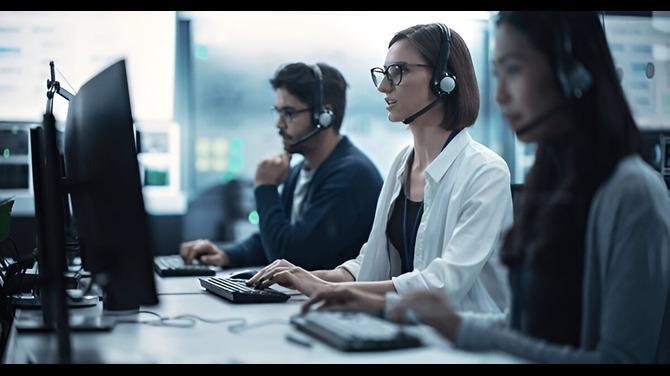
A pilot conducted by a multinational insurance firm measured a 17 % reduction in average handling time after deploying real‑time accent correction on its inbound support line. Agents reported fewer “Can you repeat that?” moments, and customers completed surveys with higher satisfaction scores.
3.2 Mitigating Accent‑Based Discrimination
Human Resources departments are turning to AI Accent Bias Removal Tools during internal video‑interviews and conference calls. By presenting every participant’s speech in a neutralized form, decision‑makers are forced to focus on content rather than delivery, effectively leveling the playing field for candidates from diverse linguistic backgrounds.
3.3 Strengthening Brand Consistency
Large enterprises often maintain a corporate voice—think of a fintech company that wants every outbound call to sound like a single, trustworthy representative. AI accent harmonization can automatically align all agents’ speech to that brand voice, reinforcing brand equity without forcing employees to adopt an artificial speaking style.
4. Key Use Cases
| Industry | Scenario | Value Delivered |
| Customer Support | Live chat‑to‑voice escalation for multilingual callers | Faster resolution, reduced repeat calls |
| Sales & Business Development | Cold‑calling prospects across continents | Higher conversion, smoother pitch delivery |
| Healthcare Tele‑consultations | Doctors communicating with patients in rural dialects | Improved diagnostic clarity, patient trust |
| Education & E‑Learning | Real‑time lecture translation and accent smoothing for global classrooms | Greater student engagement, lower dropout rates |
| Recruiting & HR | Virtual interviews where candidates’ speech is normalized | Fairer assessments, reduced unconscious bias |
5. Ethical Considerations & Best Practices
5.1 Consent & Transparency
Any deployment of real‑time accent correction must be transparent to all parties. Organizations should:
-
Inform participants that their speech will be processed by an AI accent harmonization engine.
-
Provide opt‑out options for individuals uncomfortable with voice alteration.
5.2 Preserving Identity
While the goal is to reduce bias, it is equally important not to erase a speaker’s cultural identity. The best implementations allow for customizable target accents—for example, a “neutral English” option, a “regional corporate” option, or a “preserve original” mode. This flexibility respects personal expression while still delivering clarity where needed.
5.3 Avoiding Over‑Normalization
Excessive smoothing can lead to a “robotic” voice that feels inauthentic. Continuous human‑in‑the‑loop monitoring ensures the output remains natural, expressive, and comfortable for both speakers and listeners.
6. Technical Challenges and How They’re Being Solved
| Challenge | Current Solution |
| Latency – Maintaining sub‑200 ms delay for live conversation. | Edge‑computing deployment, model quantization, and streaming ASR/TTS pipelines. |
| Data Diversity – Obtaining balanced training data across all accents. | Open‑source multilingual corpora (e.g., Common Voice), synthetic data generation via voice conversion. |
| Speaker Identity Drift – Risk of losing unique vocal traits. | Speaker‑preserving encoders and voice‑style embeddings that keep timbre constant. |
| Regulatory Compliance – GDPR, CCPA, and audio data governance. | On‑device processing, anonymization, and clear data‑retention policies. |
7. The Road Ahead: What to Expect in the Next 3‑5 Years
-
Multilingual Real‑Time Harmonization – Systems will not only neutralize accents within a language but also seamlessly translate between languages while preserving speaker intent.
-
Personalized Accent Profiles – Employees could select a preferred “communication profile” (e.g., “global neutral,” “regional friendly”) that the AI applies on the fly.
-
Integration with Collaboration Suites – Expect built‑in accent correction modules in platforms like Microsoft Teams, Zoom, and Slack, requiring no third‑party plugins.
-
Continuous Bias Auditing – AI providers will release dashboards that quantify how much accent bias has been removed, fostering accountability.
8. Getting Started: A Practical Checklist
If you’re considering real‑time accent correction for your organization, follow these steps:
-
Define the Goal – Is the priority call clarity, bias mitigation, brand consistency, or a mix?
-
Select a Vendor – Look for providers that emphasize AI Accent Bias Removal Tools, robust multilingual datasets, and transparent model documentation.
-
Run a Pilot – Choose a low‑risk environment (e.g., internal team meetings) and measure key metrics: handling time, satisfaction scores, and perceived naturalness.
-
Gather Feedback – Survey both speakers and listeners on comfort, authenticity, and any unintended side‑effects.
-
Iterate & Scale – Refine the target accent, adjust latency settings, and expand to customer‑facing channels.
9. Conclusion
In a world where business conversations hop across borders at the click of a button, real‑time accent correction is emerging as a silent, powerful ally. By leveraging AI Accent Bias Removal Tools and sophisticated ai accent harmonization techniques, companies can eliminate unnecessary friction, protect against unconscious bias, and deliver a consistently clear voice—no matter where the speaker resides.
But technology alone isn’t enough. Ethical deployment, respect for linguistic identity, and transparent communication remain critical to unlocking the true potential of these tools. When balanced correctly, the result is a more inclusive workplace, happier customers, and a brand voice that resonates—clearly and fairly—across the globe.

 English
 Arabic
 French
 Spanish
 Portuguese
 Deutsch
 Turkish
 Dutch
Dutch
 Russian
 Romaian
 Portuguese (Brazil)
 Greek
Greek