


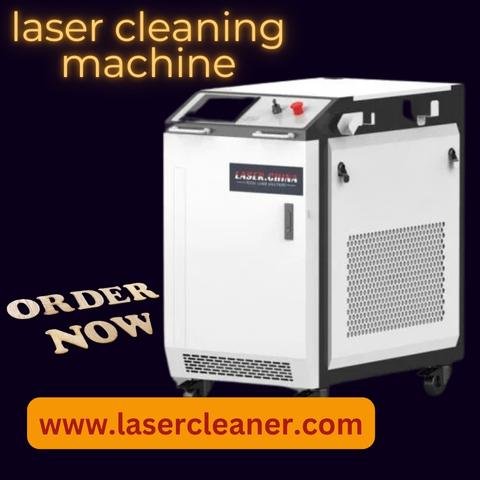
A laser cleaning machine is a modern industrial device that uses concentrated laser beams to remove rust, paint, oil, oxides, and other surface contaminants from metal, stone, and composite materials. Unlike conventional cleaning methods that rely on chemicals or abrasive blasting, laser cleaning uses high-energy light pulses to vaporize unwanted layers without physical contact. This makes the process precise, safe for the base material, and suitable for delicate or high-value components.
The principle behind a laser cleaning machine is based on laser ablation — when the laser beam interacts with a material’s surface, it selectively removes contaminants without affecting the underlying substrate. The machine’s laser parameters, such as pulse width, frequency, and power, are adjusted to match the specific cleaning task, ensuring optimal results. Over the past decade, industries have increasingly replaced chemical cleaning and sandblasting with laser cleaning systems due to their reliability, efficiency, and environmental compatibility.
Industrial Applications of Laser Cleaning Machines
Laser cleaning machines are now widely used across different industrial sectors, particularly where precision and cleanliness are critical. In manufacturing, they help prepare metal surfaces before welding, coating, or painting, ensuring better adhesion and durability. Automotive manufacturers use them to remove oxides, adhesives, and contaminants from car components and molds.
In the aerospace sector, laser cleaning machines help maintain turbine blades, aircraft parts, and structural components without compromising material integrity. The energy and shipbuilding industries use them to clean large-scale metal structures, removing corrosion and old coatings with speed and accuracy.
Heritage restoration projects also benefit from this technology. Museums and conservation specialists use laser cleaning to gently remove soot, pollution residues, and biological growth from historical stone and bronze artifacts. Because the laser can be finely tuned, it can clean fragile or valuable surfaces without causing damage that traditional methods might inflict.
Working Process of a Laser Cleaning Machine
The process begins when the laser beam is directed toward the target surface through an optical system. The energy absorbed by the contaminants heats and vaporizes them, creating plasma and shock waves that lift away unwanted material. The base material reflects most of the laser energy, remaining unharmed during cleaning.
A typical laser cleaning system consists of a laser source, fiber cable, scanning head, control system, and cooling unit. Fiber lasers are the most common source type due to their stability, long lifespan, and energy efficiency. The scanning head directs the laser beam in precise patterns over the surface, ensuring uniform cleaning.
Some laser cleaning machines use pulsed lasers for precise control, while others use continuous-wave lasers for high-speed removal in large areas. The operator can control the laser intensity and movement, making the process suitable for delicate or heavy-duty cleaning tasks. Additionally, laser cleaning produces minimal waste—only the removed material, which can be extracted using a fume extraction system.
Environmental and Operational Efficiency
One of the major shifts in industrial cleaning methods has come from the global focus on sustainability. A laser cleaning machine supports this movement by eliminating the need for toxic chemicals, abrasives, or consumables. Since it doesn’t use solvents, it produces no secondary waste, minimizing the need for disposal or post-cleaning treatment.
This not only helps companies comply with environmental regulations but also lowers overall operating costs over time. The dry and contactless process also reduces wear on tools and equipment. With proper setup, a single operator can clean complex surfaces without manual scrubbing or media blasting, increasing productivity and workplace safety.
The absence of harmful residues makes laser cleaning suitable for industries where cleanliness standards are strict—such as electronics, medical device manufacturing, and precision engineering. It helps achieve consistent results without contaminating sensitive environments.
Precision and Control in Modern Manufacturing
The flexibility of a laser cleaning machine allows operators to precisely control beam parameters according to the surface condition. Whether removing micro-scale oxides from electronic parts or heavy rust layers on machinery, the laser system can adapt instantly through software adjustments.
This level of precision is essential in industries where even small imperfections can affect performance. For example, before welding or bonding operations, laser cleaning prepares the surface by removing oxides and oils, ensuring stronger and more reliable joints. In mold maintenance, it removes residues without altering the mold geometry, extending the tool’s service life.
Robotic integration has further enhanced the technology. Automated laser cleaning machines can now be installed on production lines, performing continuous cleaning cycles with repeatable accuracy. These systems are often equipped with real-time sensors that detect surface conditions, allowing for adaptive cleaning in dynamic manufacturing environments.
Cost and Long-Term Value
While the initial investment in a laser cleaning machine can be higher than traditional equipment, its operational cost over time is significantly lower. The machine consumes only electricity and requires minimal maintenance. Since there are no consumables or replacement media, running expenses remain stable regardless of usage intensity.
Durability is another factor contributing to long-term value. Fiber lasers, which are the core component of most cleaning systems, can last up to 100,000 working hours with consistent output. Moreover, because laser cleaning is non-contact, there’s almost no wear on the machine components, reducing downtime and maintenance intervals.
For companies focused on efficiency and quality, the ability to automate cleaning tasks and maintain consistent standards adds measurable economic benefit. Many industries report shorter production cycles, reduced material wastage, and improved process reliability after integrating laser cleaning into their workflows.
Safety and Technological Advancements
Safety is central to modern laser cleaning systems. Machines are built with protective housings, interlocks, and automatic shutdown mechanisms to prevent accidental exposure. Operators typically wear laser-rated safety goggles, and enclosed workstations ensure compliance with safety regulations.
Recent developments in laser cleaning technology focus on enhancing performance, portability, and automation. Compact handheld laser cleaning machines are now available for on-site operations such as pipeline maintenance, ship deck cleaning, and heavy equipment restoration. These portable systems combine high power with ergonomic design, making them ideal for outdoor or large-scale applications.
Advanced control software and real-time monitoring systems have also improved usability. Operators can adjust cleaning parameters via touchscreens or remote interfaces, allowing for consistent results even with complex materials. Artificial intelligence and vision-guided control systems are being introduced to analyze surface conditions and optimize laser output automatically, further improving efficiency.
Industrial Growth and Future Prospects
As industries continue to modernize, demand for sustainable and efficient cleaning technologies is rising. A laser cleaning machine has become a core part of this transformation, replacing outdated and environmentally harmful methods. Sectors like automotive, aerospace, railways, and power generation are investing heavily in laser systems for maintenance and production.
The market growth is also driven by the increasing adoption of Industry 4.0 standards. Laser cleaning machines can be integrated into smart manufacturing environments, communicating with other equipment for synchronized production. Data analytics tools now help track cleaning performance and optimize operational parameters over time.
With global regulations tightening on hazardous waste and chemical usage, laser cleaning technology is set to dominate surface treatment applications in the coming decade. Manufacturers that adopt this technology early are likely to gain competitive advantages through cost reduction, improved quality, and environmental compliance.
Final Thoughts
A laser cleaning machine represents the next stage of industrial surface treatment, combining precision, efficiency, and sustainability in one solution. It aligns with the evolving demands of modern manufacturing, where quality, safety, and environmental responsibility are no longer optional but essential. As innovation continues to refine laser systems, their versatility will expand across more industries, creating new possibilities for cleaner, faster, and more efficient production processes.

 Arabic
 French
 Spanish
 Portuguese
 Deutsch
 Turkish
 Dutch
Dutch
 Italiano
 Russian
 Romaian
 Portuguese (Brazil)
 Greek
Greek